

 EN
EN
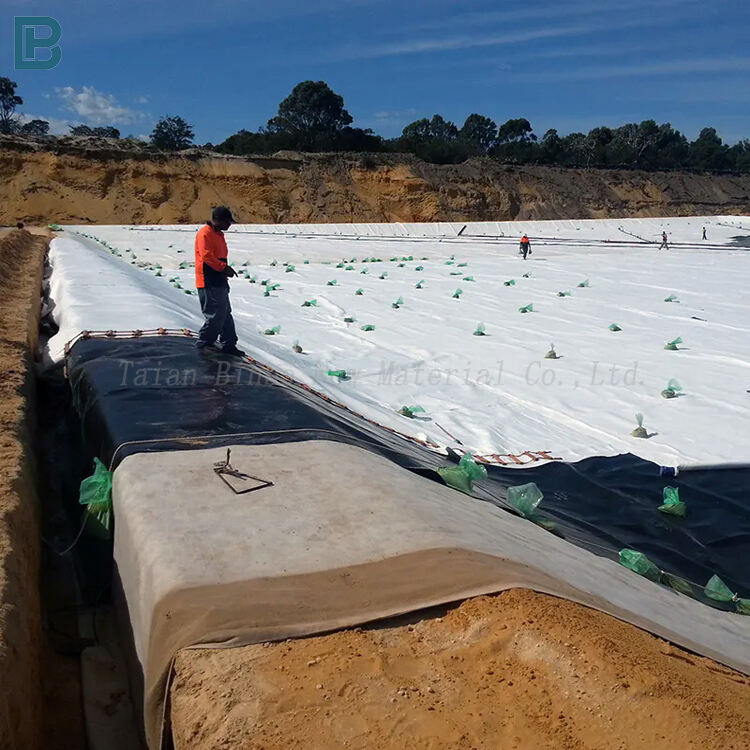
Core Functions of Geotextile in Road Construction
Geotextiles serve as indispensable engineered materials in modern roadways, performing three critical roles that ensure structural integrity and longevity.
Separation: Preventing Pavement Layer Intermixing
Geotextiles serve as barriers separating different types of soil layers, especially when there's contact between weak subgrades and the coarser aggregate bases beneath roads. They stop small particles from moving upwards through the ground when vehicles repeatedly pass over them. The result? Better protection for the base layer underneath, improved drainage throughout the system, and stronger support for whatever weight is placed on top. If these layers aren't properly separated, dirt and debris tend to mix with the aggregates, weakening road surfaces significantly. According to recent research published by the Transportation Research Board last year, this kind of contamination can actually cut down pavement strength by around 40 percent in some cases.
Filtration and Drainage: Managing Water Flow Without Clogging
These fabrics enable controlled water passage while retaining soil particles—a balance achieved through precisely engineered pore sizes. High-permeability non-woven geotextiles, for example, allow 90% of precipitation to drain within 30 minutes while blocking silt intrusion. This mitigates saturation-induced weakening, a leading cause of premature pavement failure.
Reinforcement: Enhancing Soil Load-Bearing Capacity
By distributing localized vehicular loads over wider areas, geotextiles reduce subsoil deformation and suppress rutting. Their tensile strength supplements marginal subgrades, permitting optimized aggregate thickness without compromising performance. Field data shows reinforced sections experience 30% fewer rutting incidents over five years compared to unreinforced counterparts.
Selecting the Right Geotextile for Road Applications
Woven vs Non-Woven Geotextile: Strength, Permeability, and Use Cases
Woven geotextiles are made of polyester or polypropylene filaments that are interlaced together, giving them impressive tensile strength often above 120 kN per meter and good resistance against punctures. These properties make them excellent choices for reinforcing roads with heavy traffic or stabilizing weak subgrade soils. On the other hand, non-woven geotextiles get their structure through either heat treatment or chemical processes. They focus more on letting water pass through quickly (usually over 100 liters per square meter per second) and filtering out particles effectively. This makes them great for drainage systems under road shoulders or areas where erosion is a concern. According to research done at the Geosynthetic Research Institute, when used in soft ground conditions, woven materials can decrease road surface ruts by around 40%. Meanwhile, non-woven types help prevent drainage blockages about 60% better than traditional methods.
Matching Geotextile Specifications to Subgrade Soil and Traffic Loads
The choice of materials needs to match both the type of subgrade soil and how much traffic will be passing over it. When dealing with granular soils that let water pass through easily like sand, using non-woven geotextiles with an opening size no bigger than about 0.3 mm works best. These help stop small particles from moving around while still allowing proper drainage. Things get different when working with clay soils that don't drain well. Here, we typically need stronger woven fabrics rated above 500 kN/m modulus to spread out the weight from heavy vehicles properly. According to industry guidelines set by AASHTO M288, these recommendations form part of standard practice for road construction projects across North America.
- Low-volume roads (<1 million ESALs): Non-woven, minimum 4 oz/yd²
-
Highways (>10 million ESALs): Woven, UV-stabilized, minimum 8 oz/yd²
Correct specification reduces long-term maintenance costs by 30%, according to Federal Highway Administration analysis.
Proper Geotextile Installation Techniques
Subgrade Preparation and Interface Friction Optimization
Getting good performance starts with proper subgrade work. First things first: clear away all vegetation, sweep up debris, and get rid of any sharp objects lying around. Then compact the ground down to at least 95% Proctor density standards. A smooth surface matters too since uneven spots can lead to settling issues later on. When dealing with cohesive soils specifically, giving them a light spray before laying materials actually helps create better grip between the soil and whatever fabric goes over it. This prevents those annoying problems where things either tear through, slide around, or fail to distribute weight properly when vehicles pass over.
Critical Layout Practices: Overlap, Tension Control, and Wrinkle Avoidance
When laying out geotextile material, make sure it runs across the direction of traffic flow. Keep at least 300 mm overlap on the sides and about 1 meter at each end. Apply just enough tension so the fabric lies flat but don't go overboard pulling it tight since too much force can actually tear the material. Slack is also bad news because loose sections will wrinkle up. Get those edges secured right away with either backfill material or staples, particularly important when working on sites prone to wind gusts. To avoid wrinkles altogether, try unrolling the fabric slowly going downhill. Those pesky folded areas not only look messy but they'll wear out faster and block proper water drainage too. Before putting down any aggregate layers on top, take a good long look around to ensure everything looks continuous and properly aligned across the entire surface area.
Long-Term Performance Benefits of Geotextile in Unbound Pavements
When we put geotextiles into those unpaved road surfaces, they actually help these roads last longer because they stop certain things from breaking down over time. One big benefit is that the geotextile acts as a barrier between the gravel layers and the soil underneath, so everything stays where it should even after lots of vehicles pass over repeatedly. Another thing these materials do really well is let water drain away quickly while keeping tiny particles in place. Field tests have shown this can cut down on problems caused by too much moisture by about 40%. And there's also reinforcement benefits worth mentioning too. These fabrics strengthen the ground beneath the road surface, making it harder for those annoying ruts to form deep grooves in the road, which happens to be the main reason why most unpaved roads eventually fail.
Field studies demonstrate that geotextile-reinforced unbound sections require 50% fewer maintenance interventions over a decade versus unreinforced equivalents. Lifecycle cost savings reach 30%—driven by delayed reconstruction, reduced aggregate consumption, and extended functional performance. Ultimately, geotextiles transform unbound pavements into resilient, resource-efficient infrastructure assets—slowing deterioration while maximizing long-term value.
FAQ
What are geotextiles in road construction?
Geotextiles are engineered fabrics used in road construction to improve separation between soil layers, manage water flow, and enhance soil load-bearing capacity.
How do geotextiles help with drainage?
Geotextiles allow controlled water passage while retaining soil particles, preventing clogging and saturation-induced weakening of the pavement.
Why is separation important in road construction?
Separation prevents the intermixing of pavement layers, maintaining the structural integrity of roads and reducing contamination that weakens them.
What is the difference between woven and non-woven geotextiles?
Woven geotextiles offer high tensile strength and puncture resistance, suitable for heavy traffic roads. Non-woven geotextiles focus on filtration and quick water passage, ideal for drainage and erosion control.
How does reinforcement work with geotextiles?
Reinforcement with geotextiles distributes vehicular loads over wider areas, reducing subsoil deformation and rutting.