

 EN
EN
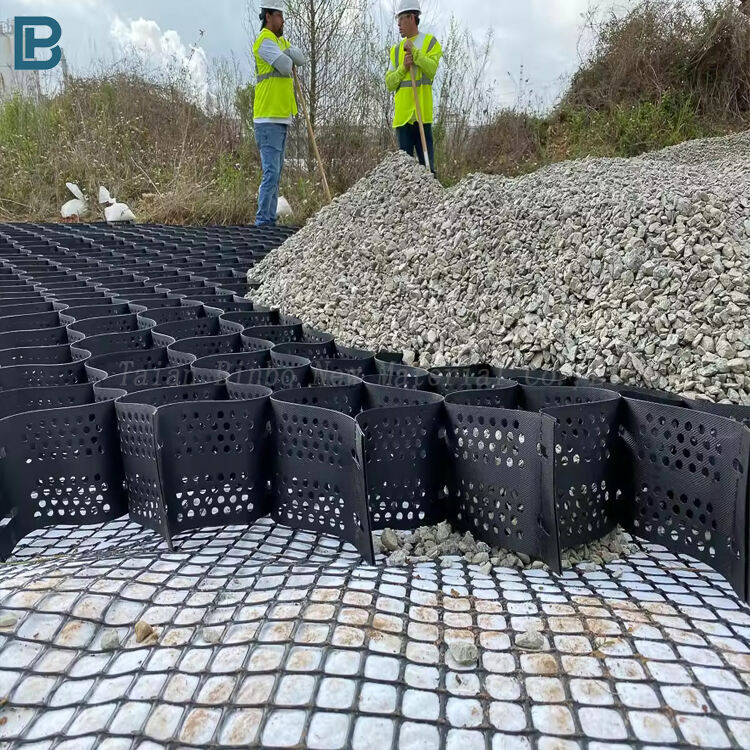
How Gravel Stabilizer Grids Enhance Load-Bearing Capacity for Heavy Commercial Traffic
The Problem: Rutting and Surface Failure in Unstabilized Gravel Parking and Access Routes
Gravel surfaces that aren't properly stabilized tend to fall apart pretty fast when subjected to heavy commercial traffic. The constant back and forth of trucks creates deep ruts over time, sometimes reaching three inches or more within just a few months. These ruts mess with proper drainage, make accidents more likely, and speed up the erosion of what's underneath. According to some recent studies like the one from Ponemon in 2023, facility managers are losing around seven hundred forty thousand dollars every year dealing with repairs and fixing damaged vehicles. When gravel isn't held together properly, it tends to move sideways as trucks pass over, which significantly reduces how much weight the surface can actually support. Tests show this reduction can be as high as sixty percent when compared with surfaces that have been stabilized correctly.
The Science: Cellular Confinement Systems Distribute Dynamic Loads Across the Aggregate Base
Cellular Confinement Systems (CCS) really change how gravel behaves when we talk about geosynthetic engineering solutions. The system's honeycomb design basically traps the aggregate material both up and down, spreading out those heavy vehicle loads across several neighboring cells instead of concentrating them in one spot. According to recent studies from the Geosynthetic Research Institute in 2023, this approach cuts down on ground pressure by almost half. When an 80,000 pound truck drives over these systems, the force gets spread sideways through all those connected cells rather than just crushing the soil underneath like traditional methods do. What happens next is pretty interesting too – the aggregate particles lock together, stopping them from moving around so much. This keeps surfaces level where they need to be and creates what engineers call a semi-rigid composite layer. And guess what? This construction actually passes the ASTM D4439 compression tests required for most industrial applications today.
Optimizing Gravel Stabilizer Grid Selection for Commercial Site Types
Matching Grid Depth (3", 4", 6") to Application: Parking Lots, Service Lanes, and Industrial Yards
Getting the right grid depth matters a lot for how long things last based on what's happening at the site. Three inch grids work well enough for places where not too many people or vehicles pass through, such as retail parking lots and sidewalks. They strike a good balance between stopping those annoying wheel ruts and keeping costs down during installation plus helping water drain properly. When we look at four inch systems, these are better suited for service roads and areas where delivery trucks park regularly. These can handle medium weight trucks weighing around 26 thousand pounds without breaking down, though they still need to maintain proper strength levels while letting water pass through. Industrial sites that deal with really heavy machinery including forklifts weighing over ten thousand pounds require something stronger. Six inch grids provide that extra stability needed to keep everything from shifting around when subjected to constant heavy pressure over time.
| Depth | Best For | Load Capacity | Key Benefit |
|---|---|---|---|
| 3" | Retail parking, walkways | Passenger vehicles | Cost efficiency, quick install |
| 4" | Service lanes, delivery zones | Medium trucks (26k lbs) | Balanced strength/drainage |
| 6" | Industrial yards, logistics | Heavy equipment | Maximal load distribution |
Product Comparison: Cost, Strength, and Installation Efficiency
When it comes to commercial construction projects, there's always a balancing act between how fast something gets done, how strong it needs to be, and how long it will last. The polymer based Type A grid system actually cuts down on installation time by about twenty percent thanks to those interlocking panels. That makes these grids really good for situations where time matters most, such as expanding parking lots during busy seasons. Plus they save around fifteen percent on initial costs compared to alternatives. On the flip side, the reinforced Type B grids can handle nearly thirty percent more pressure according to ASTM D6637 tests. For things like emergency vehicle access roads or any infrastructure that needs extra durability against heavy traffic, Type B is generally what professionals go for because of its better resistance to shearing forces. While Type A definitely saves money at first glance, Type B tends to outlast it by threefold in areas with constant foot or vehicle traffic, which means lower maintenance expenses over time. Most contractors find that both types work their best when used with angular crushed stone sized between one half inch to two inches, since this creates stronger mechanical connections between the materials.
Long-Term Performance: Erosion Control, Rut Resistance, and Aggregate Retention
Interlock Mechanics: How Gravel Stabilizer Grids Lock Aggregate to Prevent Lateral Migration and Washout
Gravel stabilizer grids prevent lateral migration and washout by mechanically locking aggregate within their cellular structure. The honeycomb design distributes vertical loads horizontally, anchoring stones in place without sacrificing permeability. This reduces surface erosion by 89% versus unstabilized gravel (Geotechnical Engineering Journal 2023). Three interrelated mechanisms drive this resilience:
- Vertical Containment: Grid walls stop stones from sinking into subsoil under repeated loading
- Horizontal Restraint: Adjacent cells limit gravel movement in all directions
- Surface Tension: Interlocked aggregate forms a semi-rigid mat resistant to shear
The result is permanent rut resistance and up to 22 years of service life without aggregate replacement—ensuring consistent surface integrity across industrial yards, fire lanes, and commercial parking areas.
Total Cost of Ownership: ROI, Lifecycle Savings, and Sustainability Benefits of Gravel Stabilizer Grids
Data-Driven Value: 3.2— ROI Over 10 Years in Service Access Routes (NCHRP Report 852)
Commercial operators realize a 3.2— return on investment over ten years when installing gravel stabilizer grids in high-traffic access routes, according to NCHRP Report 852. This value stems from three measurable savings:
- Aggregate retention cuts replenishment needs by 70-90%, slashing material expenses
- Rut prevention reduces annual regrading by 60%, lowering labor and equipment costs
- Stormwater compliance minimizes erosion-related fines through controlled runoff management
Lifecycle analysis confirms grids reduce carbon footprints by 40% versus traditional gravel—thanks to less earthmoving, fewer aggregate deliveries, and reduced fuel consumption. With minimal upkeep, they extend surface lifespan to 15+ years—supporting both ESG commitments and long-term financial performance.
Frequently Asked Questions
What are gravel stabilizer grids and how do they work?
Gravel stabilizer grids are structures designed to confine and stabilize aggregate materials, preventing ruts, erosion, and surface failure. Their cellular design distributes heavy loads across multiple cells, reducing ground pressure and maintaining surface integrity.
How do you select the appropriate grid depth?
The grid depth is selected based on the type of commercial site and the expected load. 3" grids are suitable for retail parking and walkways; 4" grids for service lanes and delivery zones; 6" grids for industrial yards and heavy equipment areas.
What are the long-term benefits of using gravel stabilizer grids?
Gravel stabilizer grids offer long-term benefits like erosion control, rut resistance, aggregate retention, reduced maintenance costs, improved load-bearing capacity, and compliance with environmental standards.
Table of Contents
- How Gravel Stabilizer Grids Enhance Load-Bearing Capacity for Heavy Commercial Traffic
- Optimizing Gravel Stabilizer Grid Selection for Commercial Site Types
- Long-Term Performance: Erosion Control, Rut Resistance, and Aggregate Retention
- Total Cost of Ownership: ROI, Lifecycle Savings, and Sustainability Benefits of Gravel Stabilizer Grids
- Frequently Asked Questions