

 EN
EN
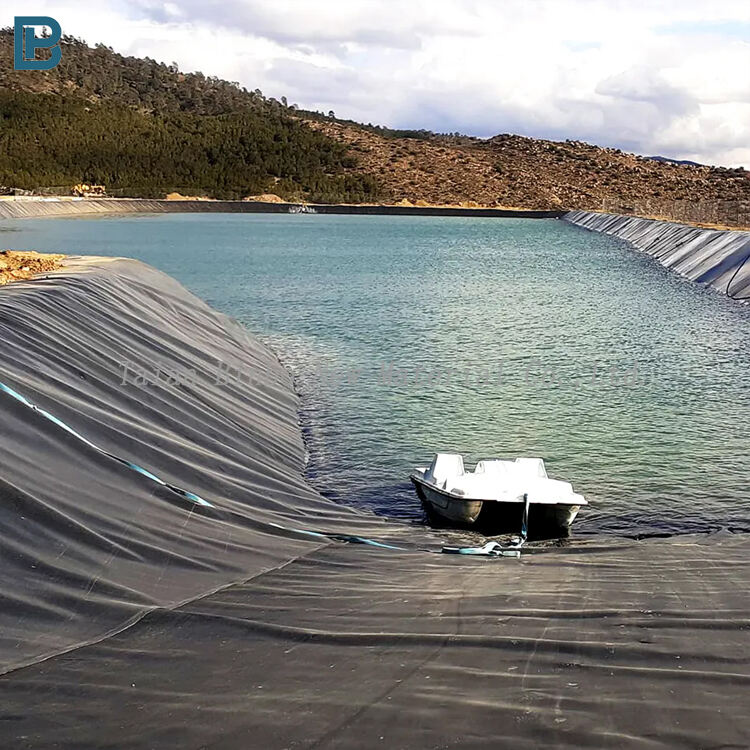
Why Geomembrane Liner Systems Are Essential for Landfill Containment
Regulatory Mandate: RCRA and EPA Requirements for Composite Liner Systems
Today's landfills must follow strict federal rules that demand special lining systems to keep things safe. According to the RCRA law and EPA standards called Subtitle D, all modern landfills need two layers of protection. The first layer is usually compacted clay, while the second is made of synthetic material known as a geomembrane. These layers work together to stop leachate from getting into groundwater. Leachate is basically what happens when rainwater mixes with waste materials, creating a dangerous soup of heavy metals and other harmful substances. If landfill operators don't follow these rules, they face serious fines that can go over $70k for each violation according to recent EPA data from 2023. That makes getting the design right absolutely essential from a legal standpoint. The regulations actually spell out specific requirements too. For instance, HDPE geomembranes need to be at least 60 mil thick, seams have to meet certain strength tests, and the whole system needs to limit water movement to less than 1x10^-12 cm per second. Getting these details right isn't just about paperwork it literally prevents environmental disasters.
Functional Role of HDPE Geomembrane in Leachate Prevention and Long-Term Integrity
HDPE geomembranes are commonly used as main barriers in landfill lining systems because they resist chemicals well, last a long time, and have incredibly low permeability at around 0.5×10⁻¹³ cm/sec. That's actually about 100 times better than what regulations require. The material gets extra UV protection from special additives, which helps it last over half a century. We saw this in action during one big landfill project where HDPE lined areas cut down leachate getting into nearby water sources by almost 98% after just ten years. Another great thing about HDPE is how flexible it stays even when the ground settles beneath it, so there's no cracking like we see with rigid materials. Proper installation matters too though. Good welding jobs, proper anchoring techniques, and adequate protective layers all contribute to making sure HDPE works for decades. And let's not forget the cost savings either. According to Ponemon Institute research from 2023, each confirmed leak can cost around $740,000 in environmental cleanup expenses.
Preparing the Subgrade for Reliable Geomembrane Installation
Critical Grading, Compaction, and Moisture Control Standards (ASTM D6272, RCRA Subpart X)
Getting the subgrade right really matters because it gets rid of those stress points that can mess up how well the geomembrane works. According to ASTM D6272 standards, anything bigger than one inch rock needs to go, along with plants and trash, while keeping surfaces smooth enough so they don't exceed half an inch roughness. When compacting soil, we need to hit around 90 to 95 percent of the standard Proctor density, and keep moisture levels pretty close to optimal - plus or minus two percent. If this isn't done properly, it actually accounts for about 37% of all liner failures according to research from the Geosynthetic Institute back in 2023. RCRA regulations under Subpart X also require ongoing checks using things like nuclear density meters and proof rolling tests throughout construction. And when dealing with weaker soils where CBR values fall below three, adding between six and twelve inches of granular material helps stabilize everything. Without this extra layer, different parts of the ground settle unevenly which puts strain on seams and eventually breaks down welds over time.
How Subgrade Defects Lead to Geomembrane Damage — and How to Prevent Them
Undetected subgrade flaws—including sharp protrusions, voids, or uncompacted zones—create localized stress concentrations that puncture or uplift geomembranes under hydraulic or mechanical load. Excess moisture accelerates subsoil erosion beneath seams, while uneven support promotes seam fatigue. Prevention hinges on proactive controls:
- Laser-grading slopes to ±3% to prevent panel slippage
- Installing nonwoven geotextile cushion layers (±8 oz/yd²) over rocky or irregular subgrades
- Conducting daily moisture tests per ASTM D2216
- Enforcing “zero tolerance” inspection zones within 10 feet of anchor trenches, where even minor imperfections risk anchorage failure
Step-by-Step HDPE Geomembrane Installation Best Practices
Unrolling, Anchoring, and Overlap Protocols per ASTM D5820
The installation process starts by laying out the panels at right angles to the slope, which helps reduce stretching forces on the material. When digging anchor trenches, they need to reach at least 0.9 meters deep according to ASTM standards. The geomembrane should be held down with either continuous rows of sandbags or proper mechanical anchors instead of those temporary wooden stakes that just don't work long term. Make sure there's an overlap of at least ten centimeters between adjacent panels, and always keep the seams running along the same direction as the slope itself. Field tests have shown that when these seams get off track by more than fifteen degrees, the chance of them failing goes up around forty percent. Once sections are laid, it's important to limit walking over them since even small holes from shoes or equipment can lead to serious problems later on.
Managing Thermal Expansion, Wind, and Handling Stress On-Site
High density polyethylene tends to expand and contract around 2% when temperatures change. Because of this property, it's important to create those intentional 10 to 15 centimeter folds or wrinkles in areas where daily temperature fluctuations exceed 30 degrees Celsius. These built-in flex points help prevent cracks and tears that happen when materials are stressed during repeated heating and cooling cycles. When dealing with wind issues, make sure to secure the edges along the perimeter at intervals of about 2.5 meters apart. Also get some ballast material ready to cover any exposed parts of the geomembrane within just four hours after laying it out. Never try to handle large HDPE sheets manually during installation. Field audits have found that doing so leads to roughly 70% more tearing problems compared to using proper equipment like spreader bars (as noted in the Geosynthetic Installation Benchmark Report from 2023). And remember to keep all HDPE rolls stored properly on pallets underneath UV protective covers until they're actually needed for installation work.
Ensuring Geomembrane Seam Integrity Through Welding and QC
Seam failures account for over 80% of landfill liner breaches—making welding quality control (QC) the single most critical phase of installation for environmental protection. Proper technique selection, real-time validation, and third-party oversight ensure leachate containment remains intact across decades.
Hot Wedge vs. Extrusion Welding: Performance, Applications, and Field Suitability
With hot wedge welding, a heated blade melts together overlapping HDPE sheets creating consistent seams at pretty good speeds for long straight runs, sometimes reaching around 3 meters per minute. But this method requires surfaces that are both flat and clean, plus the surrounding temperature needs to stay above 5 degrees Celsius. On the other hand, extrusion welding works by feeding molten polymer directly into the seam area. This technique handles all sorts of tricky situations better than others do, especially when dealing with curves, sump penetrations, or fixing things out in the field where conditions aren't perfect. While it's definitely slower moving at about half a meter to one meter per minute, extrusion welding holds up well even when temps drop close to freezing point and manages just fine over uneven ground too. When choosing between these methods, factors like weather conditions, shape requirements, and how accessible those seams actually are matter more than simply what feels easiest to work with.
Weld Validation: Peel/Shear Testing, Non-Destructive Methods, and GRI-GM17 Compliance
Every seam must undergo dual validation:
- Destructive testing: Random samples are tested per ASTM D6392 for peel and shear strength—minimum acceptance is ±80% of base material strength.
- Non-destructive evaluation (NDE): Air lance testing identifies channel leaks; spark testing detects pinholes in conductive liners; and electrical leak location surveys (ELLS) verify seam continuity beneath cover soils.
These protocols align with GRI-GM17—the industry’s definitive standard for geomembrane installation—which requires:
- Daily calibration and temperature verification of welding equipment
- 100% seam continuity verification before covering
- Independent, third-party Construction Quality Assurance (CQA) audits at all critical stages
FAQ
What is a geomembrane liner?
A geomembrane liner is a synthetic barrier used in landfills to prevent leachate contamination into groundwater. It's typically made from high-density polyethylene (HDPE).
Why is the thickness of HDPE geomembrane important?
The thickness of HDPE geomembrane is crucial for durability and effectiveness. Regulations require at least 60 mil to ensure leachate containment and protect the environment.
How does thermal expansion affect geomembrane installation?
Thermal expansion affects geomembrane installation by causing the material to expand and contract with temperature changes. Managing this with intentional folds helps prevent damage.
What are the common methods for welding geomembrane seams?
Common methods for welding geomembrane seams include hot wedge welding, which is fast and ideal for straight runs, and extrusion welding, suitable for curves and uneven surfaces.
What is the purpose of third-party Construction Quality Assurance audits?
Third-party Construction Quality Assurance (CQA) audits are conducted to ensure the integrity and compliance of geomembrane installations with industry standards like GRI-GM17.