

 EN
EN
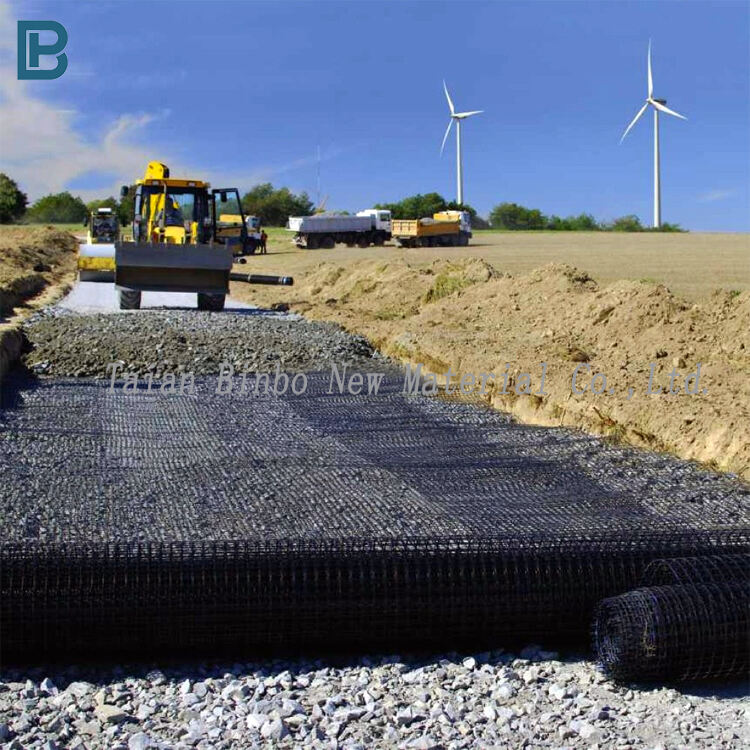
Understanding Geogrids and Their Role in Soil Stabilization
What Is a Geogrid and How It Works
Geogrids are basically synthetic materials shaped like grids that help stabilize soil by spreading out weight and preventing sideways shifting. They're typically made from stuff like HDPE or polypropylene polymers, which gives them this great combination of openness to let soil particles lock into place while still holding strong against tension forces. When installed properly, the process involves laying down these grids between layers of aggregate and compacted soil. What happens next is pretty cool actually the whole system becomes one solid unit that can stand up to pressure and stress without breaking apart or deforming over time.
The Mechanical Interlock Between Soil and Geogrid
The geogrid’s apertures trap soil particles, creating a friction-dependent bond that prevents slippage. This confinement increases shear strength by up to 40% in granular soils, according to studies on reinforced earth structures. In clay soils, the interlock helps reduce pore water pressure buildup, minimizing long-term settlement risks.
Tension Membrane Effect in Slope Stabilization
On slopes, geogrids act as tension membranes that resist downward shear forces. When soil begins to slide, the geogrid elongates slightly, activating its tensile capacity to redistribute stresses laterally. This mechanism reduces slope movement by 50–70% compared to unreinforced embankments, making it essential for landslide-prone areas.
Types of Geogrids: Uniaxial, Biaxial, and Triaxial Compared
Uniaxial Geogrids for High Tensile Strength Applications
Uniaxial geogrids have those long openings that give extra strength in just one main direction. This makes them great choices when building things like retaining walls or working on steep slopes where everything tends to move along basically one line. The ribbed design really holds up against creeping deformation when there's constant weight pressing down on them. Tests show these materials can handle over 80 kN/m of tension according to some studies from ASCE back in 2022. Roadway projects often benefit most from this type of geogrid since they deal with all that sideways pressure from soil pushing against the sides. Contractors find them especially useful in situations where traditional methods just wouldn't cut it.
Biaxial Geogrids for Multi-Directional Load Support
Biaxial geogrids provide good strength in all directions because of how they're designed with those evenly spaced openings. When vehicles drive over roads built with these grids, the weight gets spread out better across the roadbed and pavement layers. Tests show that this can cut down on rut formation by somewhere around 40 percent when compared to regular base materials without reinforcement. The rib structures running in multiple directions also help hold together loose fill material in places like parking areas and factory grounds where heavy trucks constantly pass through, creating all sorts of different pressure points across the surface.
Triaxial Geogrids: Advancing Load Distribution Efficiency
Triaxial geogrids work differently from standard options because they have those hexagonal openings that spread out stress along three different directions at once. Tests show these grids can handle about 22 percent more weight compared to regular biaxial ones when everything is controlled properly. What makes them so useful is how they help prevent uneven settling in poor ground conditions. We see this benefit most clearly in places like train tracks and airplane runways where stability matters a lot. Another advantage comes from their shape efficiency. Engineers actually find they can get away with using aggregate layers that are somewhere between 15 and 25 percent thinner while still getting good results. This saves materials and money without compromising structural integrity.
Material Comparison: HDPE vs. Polypropylene Geogrids
Durability and Longevity of HDPE Geogrids in Roadways
High density polyethylene geogrids have become a go to choice for busy roads and highways because they don't bend easily and stand up well against chemicals that would break down other materials over time. Field tests indicate these grids keep about 90 percent of their original strength even after sitting in really acidic soil for quarter of a century, which explains why engineers love them for roads where salt gets thrown down during winter or near factories that leak stuff into the ground. The way these grids hold their shape makes a big difference too. Contractors report seeing roughly 40% fewer ruts forming in pavement layers where HDPE is used, and many road projects last somewhere between eight to twelve extra years before needing major repairs compared to traditional methods.
Polypropylene Geogrids: Flexibility and Chemical Resistance
Polypropylene geogrids offer great flexibility that allows them to adapt nicely to those tricky uneven subgrades without losing their strength, which typically ranges from around 20 to 60 kN per meter. When it comes to dealing with hydrocarbons, these grids outperform HDPE materials significantly. After being submerged in fuel for 500 hours during tests, there was absolutely no swelling observed. Another advantage lies in its lower density compared to HDPE - about 0.9 grams per cubic centimeter versus HDPE's 0.95 g/cm3. This makes polypropylene much easier to work with when space is limited, especially important in projects involving mechanically stabilized earth walls where maneuverability can be a real challenge.
Environmental Degradation Factors and UV Resistance
UV protection is needed for both materials, though HDPE holds onto around 85 to 90 percent of its strength after spending 10,000 hours under UV light, while polypropylene drops down to about 75-80%. When it comes to coastal areas, HDPE stands up better against saltwater damage over time. Polypropylene just doesn't last as long in those humid environments, breaking down roughly 30% quicker than HDPE does. To protect either material from weathering, most experts recommend burying geogrids at least six inches beneath the ground surface. This simple step goes a long way toward keeping them safe from harsh elements, although exact results can vary depending on local conditions and installation quality.
Key Performance Comparison (Typical Values):
| Property | HDPE Geogrids | Polypropylene Geogrids |
|---|---|---|
| UV Resistance Retention | 90% after 10 yrs | 80% after 8 yrs |
| Chemical Resistance pH | 2–12 | 3–11 |
| Tensile Strength Range | 30–200 kN/m | 20–150 kN/m |
This comparison enables engineers to align material properties with specific project conditions.
Matching Geogrid Properties to Soil Types and Project Requirements
Soil Types and Geogrid Performance: Sandy vs. Clay Soils
The performance of geogrids really hinges on how they interact with different types of soil. When we look at sandy soils specifically, their granular composition creates excellent locking between the soil particles and the openings in the geogrid material. This mechanical interlock can boost shear strength by as much as 40 percent according to ASTM standards from 2021. Plus, these sandy materials tend to drain water pretty well which helps keep things stable by reducing the risk of dangerous pressure buildup beneath roadways or embankments. Clay soils tell a different story though. They need special attention because regular sized geogrid apertures let fine particles escape over time. Most engineers recommend going with smaller grid openings around one and a half inches maximum to stop this migration problem. And don't forget about drainage layers either since saturated clay gets really soft and unstable. Recent testing back in 2022 showed that when using those three dimensional triaxial grids instead of standard ones, deformation in clay soils dropped nearly 28% during repeated load cycles compared to areas without any reinforcement at all.
Improving Subgrade Performance with Geogrid Reinforcement
Geogrids work wonders on weak subgrades by distributing those pesky vertical stresses across a wider area. Take biaxial geogrids placed about 12 inches down in silty ground for example. These can boost the California Bearing Ratio by almost three times over, which means engineers can get away with making pavement layers 18 percent thinner without sacrificing how much weight they can handle according to AASHTO standards from 2019. Getting installation right matters too. The specs call for six inch overlaps between sections and achieving around 95 percent compaction. When these details are overlooked, roads tend to settle unevenly, something that contributes to roughly a quarter of all road failures as noted in Transportation Research Board findings last year.
Case Study: Geogrid Stabilization in Weak Subgrade Road Project
A coastal highway project with a CBR <3 subgrade used uniaxial HDPE geogrids (tensile strength: 12 kN/m) installed at 8-inch intervals. Post-construction monitoring showed:
- 32% reduction in rutting after 18 months
- $18k/mile savings in aggregate costs versus traditional lime stabilization
-
92% retained tensile strength despite saline exposure
These results support findings from the 2023 Weak Subgrade Stabilization Report, which highlights material-soil compatibility as a critical success factor.
Key Applications and Selection Criteria for Geogrids in Infrastructure
Enhancing Load-Bearing Capacity in Flexible Pavements
When installed in flexible pavement systems, geogrids work by locking into place within the aggregate layers, which cuts down on vertical stress on weak subgrade materials by around 40% according to research from Railway Engineering Studies back in 2022. The result? Less rutting and cracking problems that typically plague road surfaces. Pavements last significantly longer too, often adding between 15 to 20 extra years of service before needing major repairs while also allowing engineers to use thinner layers of aggregate material. For highway projects specifically, studies show that incorporating these grids can save approximately $32 for every square meter maintained over a decade period when compared against sections without such reinforcement. That kind of savings adds up fast across large infrastructure projects.
Geogrid Stabilization in Segmental Retaining Walls
Segmental retaining walls can actually go as high as 6 meters when reinforced with geogrids, which offer lateral support and cut down on materials by around 18 to maybe even 25 percent. We saw this firsthand during a slope stabilization job last year where adjusting the spacing between geogrid layers and changing their aperture design led to about a quarter less lateral earth pressure overall. Most engineers tend to go with biaxial geogrids because they work well in multiple directions at once, making them pretty versatile for different soil conditions. This becomes especially important when dealing with clay backfill since those soils tend to be more problematic without proper reinforcement.
Rail Trackbed Reinforcement: Reducing Ballast Degradation
Under dynamic rail loads, geogrid-reinforced trackbeds experience 35–50% less ballast settlement than conventional methods. The tension membrane effect spreads axle loads over wider areas, cutting localized degradation by 60% in high-traffic corridors (Freight Rail Analysis 2024). Triaxial geogrids are increasingly favored for their six-directional load distribution in complex track geometries.
Load Distribution, Installation Ease, and Long-Term Cost Considerations
When choosing materials, look at things like aperture size that matches up with what kind of soil we're dealing with. Junction efficiency matters too, especially when working in areas where there's lots of weight around, aiming for over 90% efficiency there. And don't forget about tensile strength at 2% strain which needs to hit at least 25 kN/m if it's going on highways. Environmental stuff plays a big role as well. For instance, HDPE really struggles under UV exposure unless protected, so this becomes super important when materials are left out in the open. The chemistry of the material also has to work with whatever pH levels exist in the surrounding soil. Installation costs generally run between four and eight dollars per square meter. But here's the kicker: these systems actually save money long term. Studies show they cut down on problems with subgrade failures somewhere around 30 to 40% over their lifetime, making them worth the initial investment despite higher upfront costs.
Key Tradeoffs:
- Higher initial geogrid costs ($1.20–$2.50/m²) vs. long-term savings from 50% fewer repairs
- Uniaxial vs. biaxial strength tradeoffs in embankment versus pavement applications
- Permeability requirements (≥0.5 cm/s) in high-water-table environments
Project teams must evaluate these factors against site-specific soil data and traffic loading requirements outlined in ASTM D6637 standards.
FAQs on Geogrids Usage and Benefits
What are the primary materials used to manufacture geogrids?
The primary materials used to manufacture geogrids are high-density polyethylene (HDPE) and polypropylene polymers. These materials provide a blend of strength and flexibility, making them suitable for various soil stabilization tasks.
How do geogrids enhance slope stabilization?
Geogrids enhance slope stabilization by acting as tension membranes that resist downward shear forces. They elongate slightly to redistribute stresses laterally, reducing slope movement by up to 70% compared to unreinforced embankments.
What factors should be considered when selecting a geogrid for infrastructure projects?
When selecting a geogrid for infrastructure projects, consider factors such as the soil type, load-bearing capacity requirements, aperture size, junction efficiency, tensile strength, environmental conditions, installation costs, and long-term savings potential.
Can geogrid applications save costs in road construction?
Yes, geogrid applications can save costs in road construction. They improve load distribution and stabilize weak subgrades, which extends the lifespan of pavements and reduces the need for repairs. Studies show geogrids can save approximately $32 per square meter in highway projects over a decade.
Table of Contents
- Understanding Geogrids and Their Role in Soil Stabilization
- Types of Geogrids: Uniaxial, Biaxial, and Triaxial Compared
- Material Comparison: HDPE vs. Polypropylene Geogrids
- Matching Geogrid Properties to Soil Types and Project Requirements
- Key Applications and Selection Criteria for Geogrids in Infrastructure
- FAQs on Geogrids Usage and Benefits