

 EN
EN
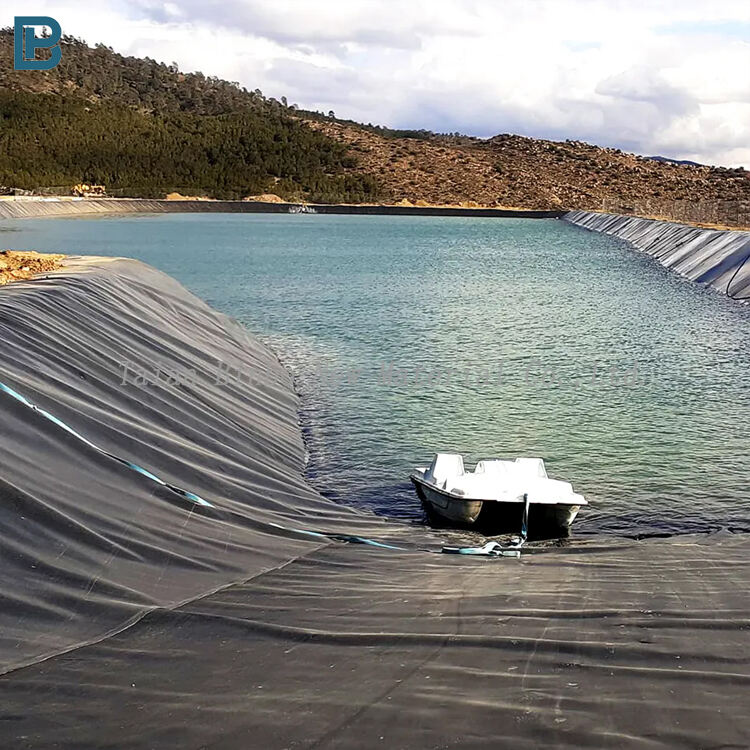
Understanding the Role of Geomembranes in Landfill Containment
Geomembranes serve as engineered barriers that isolate waste from surrounding environments, preventing ecological contamination. These synthetic liners are critical for modern landfill systems, offering impermeable protection against liquid and gaseous pollutants.
How Geomembrane Liners Prevent Leachate and Gas Migration
Geomembrane liners act as barriers against water movement, stopping harmful leachate—the stuff left over when trash breaks down—from getting into the ground and contaminating water sources below. These materials have really low permeability rates around 1 times 10 to the negative 12th power cm per second which basically means almost nothing gets through them even after years of contact with chemicals. They also capture methane gas and other dangerous VOCs, cutting down on greenhouse gases by roughly three quarters compared to old style landfills without proper lining according to EPA data from last year. The newer versions can handle sharp objects without tearing and still bend enough to fit around shifting waste masses over time. When it comes to managing gases, these membranes team up with special vents that channel collected methane towards facilities where it can be turned into usable energy instead of just escaping into the atmosphere as pollution.
Critical Applications in Landfill Liner and Capping Systems
Base liner systems typically combine geomembranes with compacted clay layers and geotextile materials to create effective composite barriers against contamination. The layered construction satisfies strict regulations such as those outlined in EPA Subtitle D for MSW landfills. When it comes to capping old landfill sites, geomembranes around 1.5 to 2 millimeters thick serve as seals for decommissioned cells. These membranes stop rainwater from seeping in and control the movement of gases after closure. Many installations also incorporate drainage layers beneath the caps to handle surface water and maintain slope stability. According to field data from various projects, well constructed systems can cut down on maintenance expenses by about 30 to 50 percent over two decades when compared with older methods that relied solely on clay liners.
Key Geomembrane Materials: HDPE, LLDPE, and PVC Compared
HDPE Geomembranes: Superior Chemical Resistance and Long-Term Stability
HDPE geomembranes, which stands for High-Density Polyethylene, are the go-to choice for most landfill containment systems because they just plain hold up better than anything else when it comes to resisting chemicals and lasting through tough conditions. The material can handle all sorts of harsh leachates found in landfills, from strong acids to various hydrocarbons, and still maintains impressive tensile strength above 35 MPa according to ASTM D6693 tests. What makes these membranes really stand out is how well they perform over time too. After undergoing those accelerated aging tests that simulate about 20 years worth of exposure, UV stabilized versions keep around 95% of their original flexibility. This kind of performance makes them particularly good for applications where the membrane will be directly exposed to sunlight in landfill caps.
LLDPE and PVC Options: Flexibility vs. Durability Trade-offs
LLDPE (Linear Low-Density Polyethylene) offers high elongation (up to 300%) for areas prone to subsidence, though its lower chemical resistance limits use to non-hazardous waste. PVC geomembranes provide moderate puncture resistance (25N vs. HDPE’s 45N) and easier installation in cold climates, but degrade in high-temperature leachate environments above 60°C.
Selecting Material Based on Waste Type and Environmental Exposure
Landfills handling municipal solid waste often utilize cost-effective LLDPE, while HDPE is required for hazardous waste containment per EPA Subtitle D regulations. In Arctic sites, PVC’s cold-weather flexibility (-40°C) offers performance advantages, though annual UV degradation rates of 12% necessitate protective covers.
Critical Physical Properties: Thickness, Strength, and Compliance Standards
Recommended Geomembrane Thickness for Different Landfill Layers
Regulatory bodies specify thickness based on layer function: bottom liners typically require 1.5–2.5 mm membranes to withstand heavy loads and prevent punctures, while intermediate covers may use 0.75–1.5 mm sheets where chemical exposure is lower. These specifications align with DIN EN ISO 5084 standards for material thickness tolerances (±10%).
Tensile Strength and Elongation: Meeting ASTM and Regulatory Requirements
Modern geomembranes must achieve minimum tensile strength of 20 MPa (ASTM D6393) and maintain −600% elongation to accommodate settlement without cracking. Third-party validation verifies mechanical performance through multi-axis stress testing simulating 50-year service conditions.
UV Resistance and Aging Performance in Harsh Conditions
HDPE formulations with carbon black additives demonstrate superior UV stability, retaining −90% of initial tensile properties after 2,000 hours in ASTM D7238 accelerated weathering tests. This ensures long-term integrity in exposed caps and slopes where solar exposure exceeds 2,500 kWh/m² annually.
Manufacturers combine these physical parameters in material data sheets, enabling engineers to balance structural requirements with project budget constraints while meeting EPA and state-specific landfill containment mandates.
Installation Best Practices and Quality Assurance for Long-Term Integrity
Proper Seaming and Welding Techniques for Leak-Free Joints
Geomembrane integrity hinges on precise seaming, with industry studies showing improper welds account for 72% of containment failures (GSI, 2023). Dual hot wedge welding remains the gold standard for HDPE liners, achieving peel strengths over 80 N/cm when performed at 300–350°C. For curved surfaces, extrusion welding fills gaps up to 6 mm, provided operators maintain a 30–45° nozzle angle to prevent stress concentrations. All procedures should follow ASTM D7747 standards, with ambient temperatures above 5°C to avoid brittle seams.
Field Testing, Inspections, and Common Installation Pitfalls
Post-installation quality checks prevent 85% of long-term leakage risks. Key protocols include:
- Spark testing: Detects pinholes in conductive liners at 15,000–30,000 volts
- Vacuum box testing: Identifies air leaks in 2.5 mm+ seams using soap solutions
- Shear/peel tests: Destructive sampling of 1 per 150 linear meters
Common errors like debris-induced wrinkles (-3 cm height) reduce liner lifespan by 40% in accelerated aging trials. A 2022 field analysis found 60% of defects originated from improper overlap sealing in transitional zones between slopes and flats.
Advancements in Automated Welding and Real-Time Monitoring
Modern automated welding systems, integrating ultrasonic seam tracking, adjusting parameters every 0.5 seconds for 99.2% weld consistency. IoT-enabled monitoring platforms like GeoIntegrity Pro® use distributed temperature sensors to detect sub-millimeter seam separations, alerting crews via SMS within 15 seconds. These technologies reduced field repair costs by 62% in a 2023 case study of 12 North American landfills.
Long-Term Durability and Performance Validation of Geomembrane Systems
Lifespan Expectancy and Accelerated Aging Studies in Landfill Environments
Today's geomembrane systems are built to last anywhere between 30 to 50 years, based on lab tests that speed up the aging process to mimic what happens over many decades in real world conditions. According to a study published on ScienceDirect back in 2022, HDPE liners still hold about 85% of their original strength even after 50 years worth of simulated UV light and chemical attacks. PVC membranes tell a different story though they tend to get pretty stiff over time, losing around 40% of their flexibility because the plasticizers just kind of drift away. Testing standards such as ASTM D7238 put these materials through their paces by subjecting them to really cold temperatures down at -40 degrees Fahrenheit all the way up to scorching 176 degrees F, plus exposure to some pretty harsh leachate chemicals. These tests help engineers figure out how long these barriers will actually last before needing replacement. For bioreactor landfills specifically, operators need to install geomembranes that are roughly 15% thicker than normal since the higher methane levels cause faster breakdown of the material over time.
Warranty Terms and Manufacturer Reliability Assessments
Leading manufacturers offer 20-year material warranties, contingent on proper installation and third-party quality audits. Key warranty considerations include:
- Chemical compatibility guarantees for specific waste types (e.g., PFAS-impacted soils vs. municipal solid waste)
- Puncture resistance thresholds validated through ASTM D5514 testing
- Mandatory 10-year infrared scans of weld seams
Only 62% of contractors meet the GRI-GM21 standard for long-term performance validation, per 2024 industry surveys, underscoring the importance of manufacturer track records in landfill projects.
Case Study: HDPE Failure Due to Oxidative Stress in Bioreactor Landfills
A 2023 forensic analysis of a failed bioreactor landfill liner revealed HDPE sheets developed 2,300 cracks/km² after 8 years—four times faster than predicted. Oxidative stress from elevated temperatures (140°F) and enzymatic activity degraded antioxidant additives prematurely, reducing the expected 40-year lifespan to just 12 years. Post-failure lab tests showed:
| Parameter | Design Spec | Actual Performance |
|---|---|---|
| OIT Retention (ASTM D3895) | 80% | 32% |
| Stress Crack Resistance | 500 hrs | 187 hrs |
This case led to updated ASTM D1603 standards requiring bimodal HDPE resins with enhanced stabilizer packages for bioreactor applications.
FAQ
What is the main purpose of geomembranes in landfill containment?
The main purpose of geomembranes in landfill containment is to act as engineered barriers that isolate waste from surrounding environments, preventing ecological contamination and offering impermeable protection against liquid and gaseous pollutants.
How do geomembrane liners prevent gas migration?
Geomembrane liners prevent gas migration by capturing methane gas and other dangerous VOCs, reducing greenhouse gases significantly and channeling collected methane towards facilities where it can be converted into usable energy.
What are the applications of geomembranes in landfill systems?
Geomembranes are used in base liner systems and capping systems of landfill sites, forming composite barriers against contamination and serving as seals for decommissioned cells to stop rainwater and control gas movement.
How do HDPE geomembranes differ from LLDPE and PVC options?
HDPE geomembranes offer superior chemical resistance and long-term stability, while LLDPE provides flexibility for areas prone to subsidence, and PVC offers easier installation in cold climates, but each material has trade-offs in chemical resistance and durability.
What are the recommended thickness and strength properties for geomembranes?
Regulatory specifications call for geomembrane thickness based on their layer function, such as 1.5–2.5mm for bottom liners, while tensile strength should meet ASTM standards to accommodate settlement without cracking.
Table of Contents
- Understanding the Role of Geomembranes in Landfill Containment
- Key Geomembrane Materials: HDPE, LLDPE, and PVC Compared
- Critical Physical Properties: Thickness, Strength, and Compliance Standards
- Long-Term Durability and Performance Validation of Geomembrane Systems
- Lifespan Expectancy and Accelerated Aging Studies in Landfill Environments
- Warranty Terms and Manufacturer Reliability Assessments
- Case Study: HDPE Failure Due to Oxidative Stress in Bioreactor Landfills
-
FAQ
- What is the main purpose of geomembranes in landfill containment?
- How do geomembrane liners prevent gas migration?
- What are the applications of geomembranes in landfill systems?
- How do HDPE geomembranes differ from LLDPE and PVC options?
- What are the recommended thickness and strength properties for geomembranes?